All Categories
Featured
Table of Contents
Modern Standards for Outdoor Surface Coordination in urban centers
The year 2026 marks a significant shift in how commercial property managers view their exterior common areas. In many high-density areas of the United States, the focus has moved beyond simple aesthetics toward extreme durability and functional flow. Courtyards that once served as mere visual breaks between office towers have become active work zones and social hubs. This transition requires a sophisticated approach to hardscape coordination, ensuring that surfaces can withstand thousands of footsteps daily while maintaining their structural integrity and visual appeal.
Property owners are increasingly moving away from traditional poured concrete in favor of modular systems. These systems allow for easier repairs and access to underground utilities without the need for unsightly patches. Planning for Pacific Green Landscape Maintenance Planting has become a standard part of the pre-construction phase for any major renovation in 2026. The goal is to create a ground plane that feels as intentional and high-quality as the interior lobby.
Material Innovations for High-Volume Foot Traffic
Selecting the right materials for a heavy-traffic courtyard involves balancing load-bearing capacity with heat management. In sunny regions like the southern states, the urban heat island effect is a major concern. Darker stones can reach temperatures over 140 degrees Fahrenheit during peak summer hours, making the space unusable. Modern designs in 2026 prioritize pavers with a high Solar Reflectance Index (SRI). Light-gray granite, sand-blasted marble, and specialized porcelain tiles are frequently used to keep ground temperatures manageable for pedestrians.
Porcelain pavers have seen a massive rise in popularity for commercial applications. At 20 millimeters thick, these tiles offer a breaking load of over 2,000 pounds, making them resistant to heavy furniture and maintenance vehicles. Because they are non-porous, they resist staining from coffee spills or food trucks, which are common fixtures in modern office courtyards. Integrating these materials requires a precise understanding of subsurface preparation. A well-compacted aggregate base or a pedestal system is necessary to prevent shifting or cracking under the weight of constant activity.
Optimizing Flow and User Experience
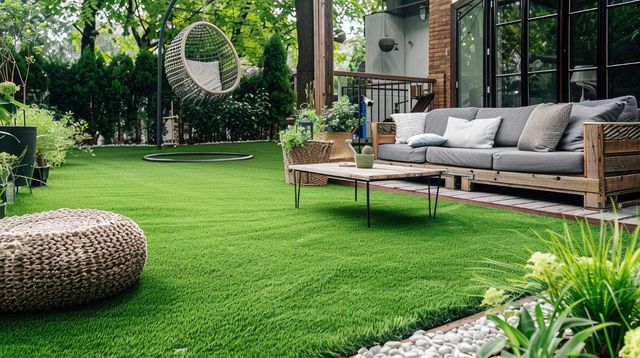
Designers in 2026 are using data-driven methods to determine the layout of hardscape elements. By observing "desire paths"—the natural routes people take to get from one point to another—planners can place harder, more resilient surfaces exactly where they are needed most. This prevents the degradation of softer edges and ensures that the most heavily used corridors are reinforced. Pacific Green Landscape Maintenance Softscape Planting Services offers a way to blend these high-traffic paths with more relaxed seating areas.
The transition between different types of surfaces is another critical coordination point. To maintain safety and ADA compliance, flush transitions are mandatory. This means the height of a stone paver must perfectly match the adjacent wood decking or permeable gravel. In 2026, many projects utilize metal edge restraints to create crisp lines between these materials. These restraints prevent pavers from migrating over time and provide a clean aesthetic that defines different zones within the courtyard, such as "quiet work corners" versus "active collaboration zones."
Sustainability and Water Management in 2026
Environmental regulations across the region have become stricter regarding stormwater runoff. Large expanses of non-porous hardscape are no longer acceptable in many new developments. Coordination now involves hiding complex drainage systems beneath the beautiful surface materials. Permeable interlocking concrete pavers (PICP) are a common solution. These systems allow rainwater to filter through the joints into a stone subbase, where it is stored and slowly released into the ground.
This subsurface coordination is vital for the health of any nearby trees or planters. If the hardscape is too restrictive, it can starve root systems of oxygen and water. Modern designs often incorporate "structural soil" or "silva cells" beneath the pavers. These systems support the weight of the hardscape and pedestrian traffic while providing uncompacted soil for root growth. This allows for large, shade-providing trees to thrive in the middle of a paved plaza, which in turn keeps the entire area cooler and more comfortable for users.
Integrating Technology and Safety Features
The courtyards of 2026 are not just about stone and dirt. They are increasingly "smart" environments. Hardscape coordination now includes the placement of recessed lighting, power outlets, and Wi-Fi boosters. Strips of LED lights are often embedded directly into paver joints to guide pedestrians at night or to highlight changes in elevation. These fixtures must be rated for heavy loads and must be perfectly flush with the surface to prevent tripping hazards.
Safety also extends to slip resistance. For many commercial renovations, architects are specifying a Dynamic Coefficient of Friction (DCOF) rating of 0.42 or higher for all outdoor surfaces. This ensures that even when the ground is wet from rain or morning dew, it remains safe for fast-moving office workers. Many property managers are searching for Pacific Green Landscape Maintenance in Southern California to verify that these safety standards are met during the installation of Commercial Softscape Installation And Planting.
Long-Term Maintenance and Resilience
While the initial investment in high-quality hardscape coordination is significant, the long-term savings are evident in the reduced maintenance requirements. In 2026, the use of polymeric sands and specialized sealants has become the norm. These materials prevent weed growth between joints and protect the stone from the de-icing salts used in colder climates or the intense UV rays found in warmer regions.
Routine inspections focus on identifying early signs of settling or joint failure. Because modular systems are used, a single damaged paver can be swapped out in minutes without disrupting the entire courtyard. This level of serviceability is essential for properties that cannot afford downtime. When the hardscape is coordinated correctly from the start, it becomes a permanent asset that increases the overall value of the commercial property, providing a reliable and attractive environment for tenants and visitors alike.

Table of Contents
Latest Posts
Maximizing Property Value With Commercial Courtyard Landscaping And Outdoor Spaces
Modernizing Your Facility With Commercial Softscape Installation And Planting
Essential Site Enhancements for Reducing Environmental Footprints
Latest Posts
Maximizing Property Value With Commercial Courtyard Landscaping And Outdoor Spaces
Modernizing Your Facility With Commercial Softscape Installation And Planting
Essential Site Enhancements for Reducing Environmental Footprints